Urgent care near me
Sane-day doctor visits
Feel better faster. Get care today.
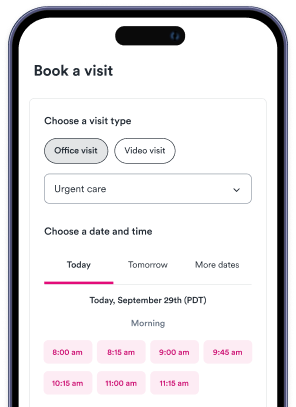
From the clinic or your couch. Find high quality, same-day urgent care for you and your kids. Book an urgent care visit today.

Illness doesn't pause for pregnancy. UTIs, colds, sinus infections, minor injuries, and skin infections don't check the calendar before arriving. And pregnancy doesn't eliminate your ability to go to urgent care — in fact, urgent care is often a practical and safe first stop for many common health problems during pregnancy, particularly when your OB or midwife isn't immediately available. Here's what you need to know to navigate urgent care during pregnancy confidently.
Urgent care is well suited to handle a wide range of conditions that occur during pregnancy. Providers are trained to evaluate and treat these with pregnancy-safe approaches:
The key in every case: tell the provider you are pregnant and how many weeks along you are before any evaluation begins. This single piece of information changes how the provider approaches testing, imaging, and treatment.
Medication selection during pregnancy requires extra care. Some common over-the-counter and prescription medications that are routine outside of pregnancy are restricted or contraindicated during certain trimesters:
Pregnancy-safe options do exist across most categories. Urgent care providers have access to prescribing references for pregnancy and will adjust their approach accordingly. Your job is to disclose your pregnancy clearly and early in the visit.
Concern about radiation often makes pregnant patients hesitant to get X-rays or CT scans. The general principle is that providers minimize radiation exposure when it's not necessary — but they will order imaging when it is clinically warranted. According to the American College of Obstetricians and Gynecologists, most diagnostic imaging studies using radiation involve doses far below those associated with fetal harm, and withholding necessary imaging can itself cause harm to mother and baby.
Ultrasound and MRI (without contrast) are considered safe during pregnancy and are often preferred alternatives when they can provide equivalent diagnostic information. If you're concerned about a recommended imaging study, ask the provider to explain the clinical rationale and any alternatives.
Urgent care is not an obstetric facility. There are specific obstetric emergencies and concerns that require labor and delivery or the ER — not urgent care:
If you experience any of these symptoms, do not go to urgent care. Go directly to the ER or your hospital's labor and delivery unit and contact your OB on the way.
Urgent care works best as a complement to your OB's care, not a replacement for it. After any urgent care visit during pregnancy, notify your OB of what you were evaluated for, what was found, and any medications that were prescribed. This allows your OB to review the treatment plan, ensure no interactions with other medications you're taking, and incorporate the visit into your overall prenatal record. Most urgent care clinics can also send a visit summary directly to your OB's office if you request it.
Pregnant women shouldn't hesitate to seek care for common illnesses — untreated infections like UTIs can cause serious complications during pregnancy. Urgent care offers same-day access when your OB isn't immediately available, and providers are trained to treat pregnant patients safely. Book your visit on Solv to find a nearby urgent care, check wait times, and complete paperwork in advance — including a place to note your pregnancy so the provider is prepared before you arrive. For any obstetric emergency, go directly to the ER or labor and delivery.
Yes. Urgent care centers can safely evaluate and treat many health conditions during pregnancy. Providers are trained to adjust their treatment approach — particularly medication selection — for pregnant patients. Always disclose your pregnancy and gestational age at check-in.
Common pregnancy-safe conditions urgent care can treat include urinary tract infections, upper respiratory infections, sinus infections, minor skin infections, lacerations, sprains, nausea and vomiting management (when dehydration is a concern), and many other routine illnesses.
Urgent care providers are trained to prescribe pregnancy-safe medications. Common safe options include acetaminophen for pain, certain antibiotics for infections, and some antihistamines for allergies. Always confirm you're pregnant so the provider can make the safest choices — some common medications like NSAIDs and many decongestants are restricted during pregnancy.
Go directly to the ER or labor and delivery for: heavy vaginal bleeding, severe abdominal cramping, decrease in fetal movement, signs of preterm labor (contractions before 37 weeks), severe headache with visual changes or swelling (possible preeclampsia), chest pain or shortness of breath.
Yes. Always inform your OB about any urgent care visits and medications prescribed during pregnancy. Your OB should maintain oversight of your overall care, and knowing about treatments you've received helps them make informed decisions.
Yes, you can go to urgent care for a urinary tract infection (UTI). If you experience pain or burning while urinating, frequent urination, or feeling the need to urinate despite having an empty bladder, low fever, cloudy or bloody urine, or pressure or cramping in the groin or lower abdomen, you should go to urgent care.
Yes, you can go to urgent care if you have mild symptoms of preeclampsia, such as headaches, upper abdominal pain, nausea or vomiting, decreased urination, or shortness of breath. If you begin experiencing severe symptoms, you should go to the emergency room, not urgent care.
You should go to the ER for pregnancy issues if you have severe abdominal pain, think you're having a miscarriage, have signs of preterm labor in your second trimester, have severe headaches accompanied by blurred vision, heavy vaginal bleeding, pain or pressure in your chest, loss of consciousness, or any other situation that seems as though it could be life-threatening.
From the clinic or your couch. Find high quality, same-day urgent care for you and your kids. Book an urgent care visit today.

Medically reviewed
View this article's sources and history, and read more about Solv's Content Mission Statement, editorial process, and editorial team.
Solv has strict sourcing guidelines and relies on peer-reviewed studies, academic research institutions, and medical associations. We avoid using tertiary references.
Solv’s team of medical writers and experts review and update our articles when new information becomes available.
Written by Solv Editorial Team
Medically reviewed by: Dr. Rob Rohatsch, MD
Edited by Solv Editorial Team
Edited by Solv Editorial Team
Edited by Solv Editorial Team
Edited by Solv Editorial Team
Edited by Solv Editorial Team
Edited by Solv Editorial Team
From the clinic or your couch. Find high quality, same-day urgent care for you and your kids. Book an urgent care visit today.